What We Found Behind an Old Deck in Conneaut
Removing an old deck can expose rotted wood where the house meets its foundation. Here is what we found on a Conneaut job and what to check before a new deck goes on.
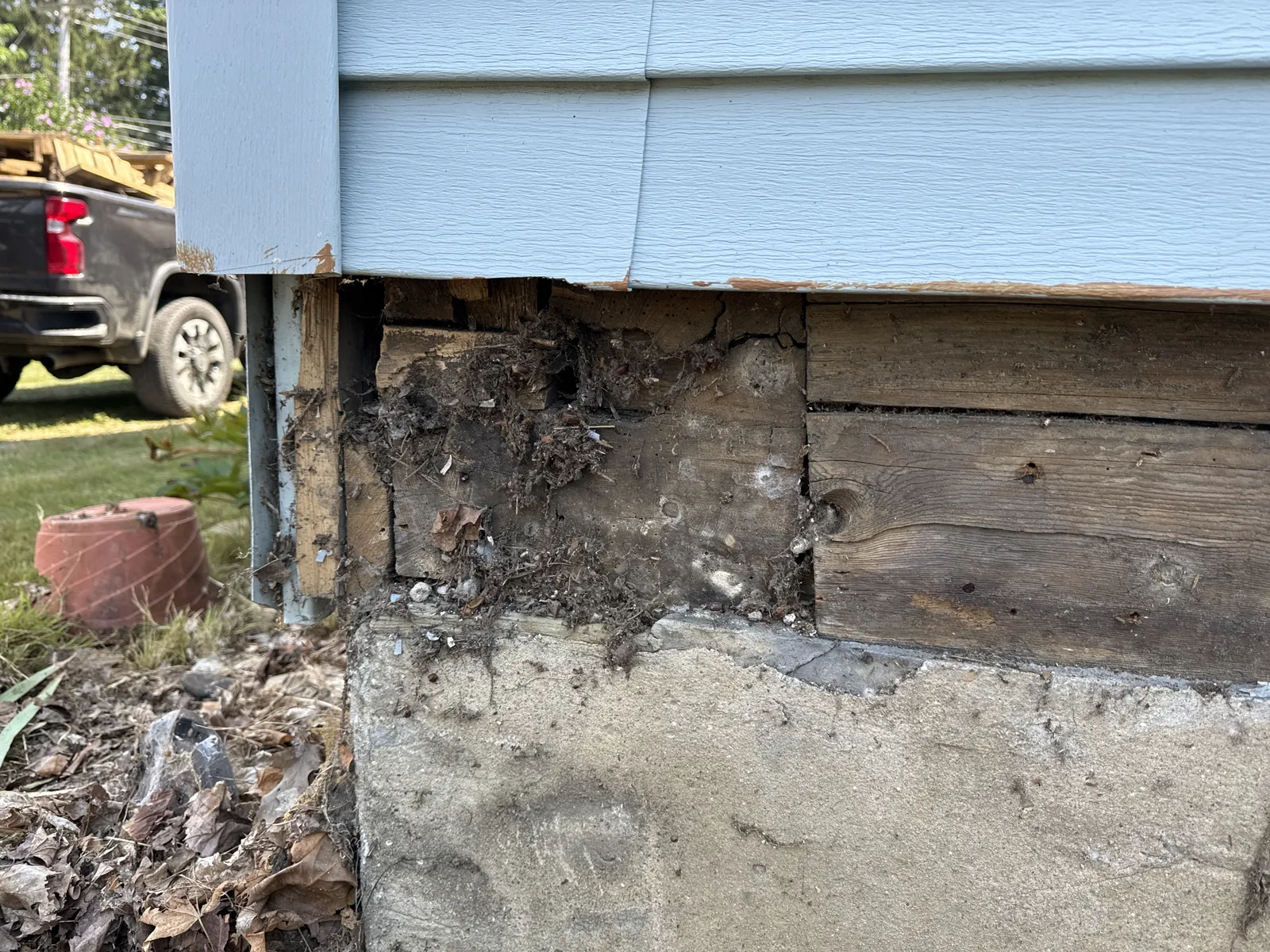
Table of Contents
Key Points
- The wall behind an old deck is often hidden for years and can hold moisture.
- Rot at the base of the wall needs to be evaluated before a new deck is attached or built against it.
- Plan for the possibility of hidden repairs and agree on how they will be documented and priced.
On a Conneaut deck replacement in July 2025, the first step was taking off the old deck and its stairs. What was behind them was the first thing the homeowner and our crew looked at together: the wood at the bottom of the wall, right where the house sits on its foundation, had rotted.
The photo above shows that spot. The siding looked normal from a few feet away. The damage was only visible once the old deck was gone.
Why the wall behind a deck takes a beating
A deck that sits tight against a house can trap water against the wall. Rain splashes off the boards, snow piles up against the siding, and leaves collect in the gap. Over many seasons, the wood at the base of the wall can stay damp far longer than the rest of the house.
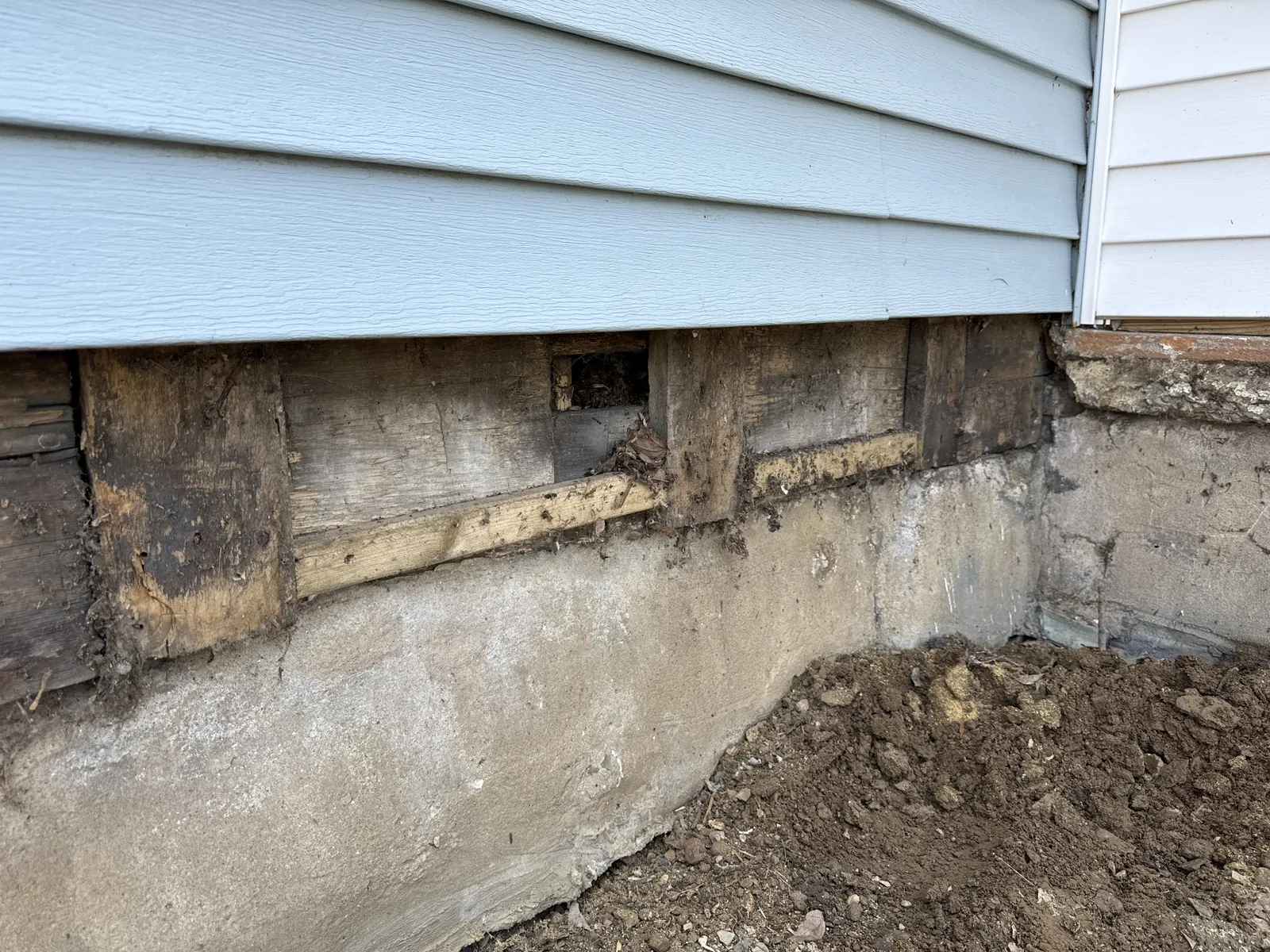
You usually cannot see this from the yard. The old deck covers it, and the siding above it can look perfectly fine.
What to look for on your own deck
You do not need to tear anything apart to watch for warning signs. Walk along the house where the deck meets the wall and look for:
- Wood that feels soft when you press on it with a screwdriver
- Dark staining or peeling paint at the bottom of the siding
- Gaps, sagging or loose boards where the deck meets the house
- Moss, mildew or water that sits against the wall after rain
- Insects or crumbling wood near the foundation
None of these prove there is rot, but any of them is a good reason to have the area checked before you plan a new deck.
Why this matters before a new deck goes on
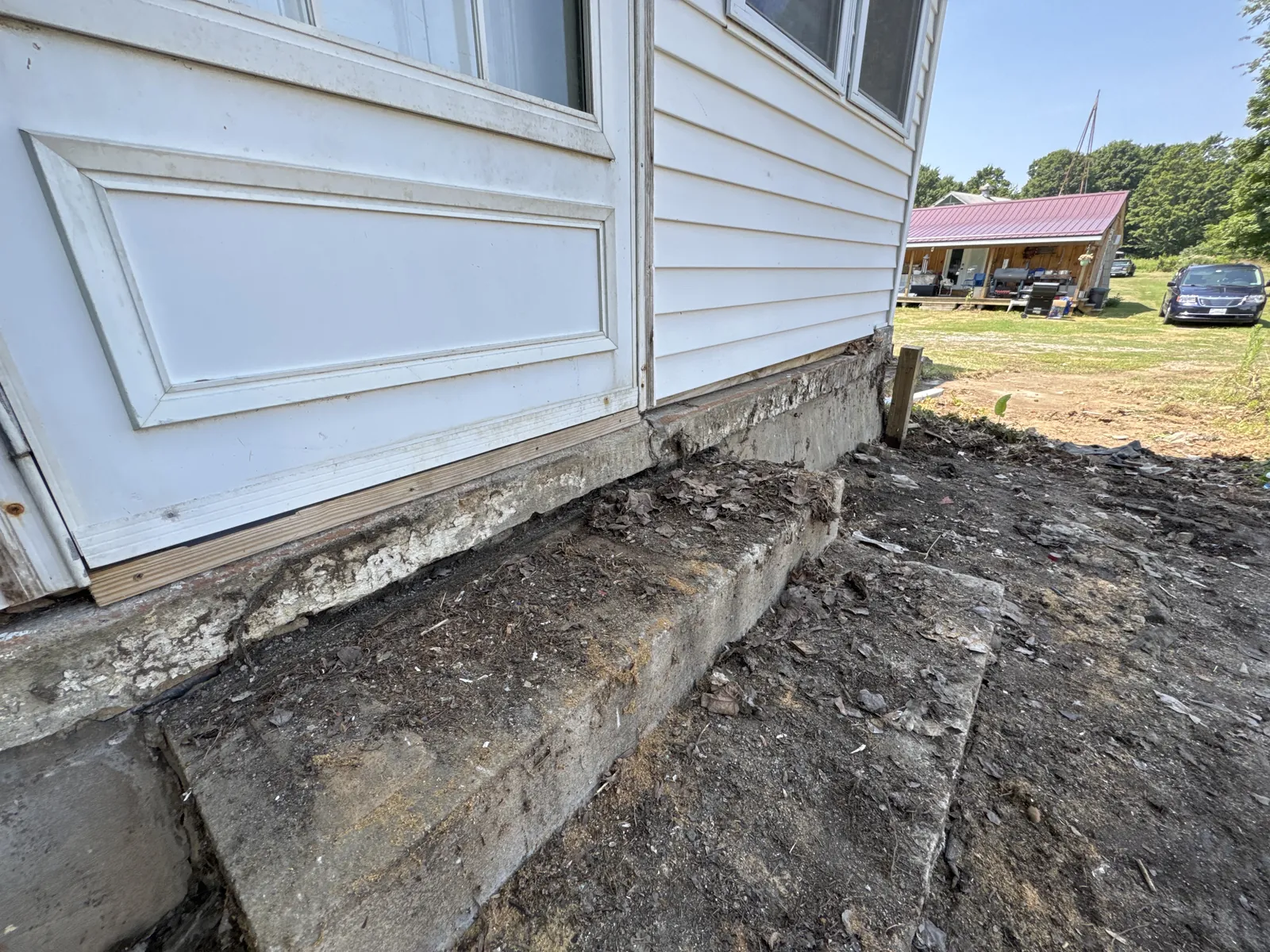
A new deck is only as solid as what it connects to. If a deck will be attached to the house, the wall needs to be sound enough to support that connection. Even a freestanding deck built close to the house should not cover up damaged wood that will keep getting worse.
That is why we treat the first day of demolition as an inspection. We photograph what we find, explain it in plain terms and talk through options before anything is covered again.
How the Conneaut deck turned out
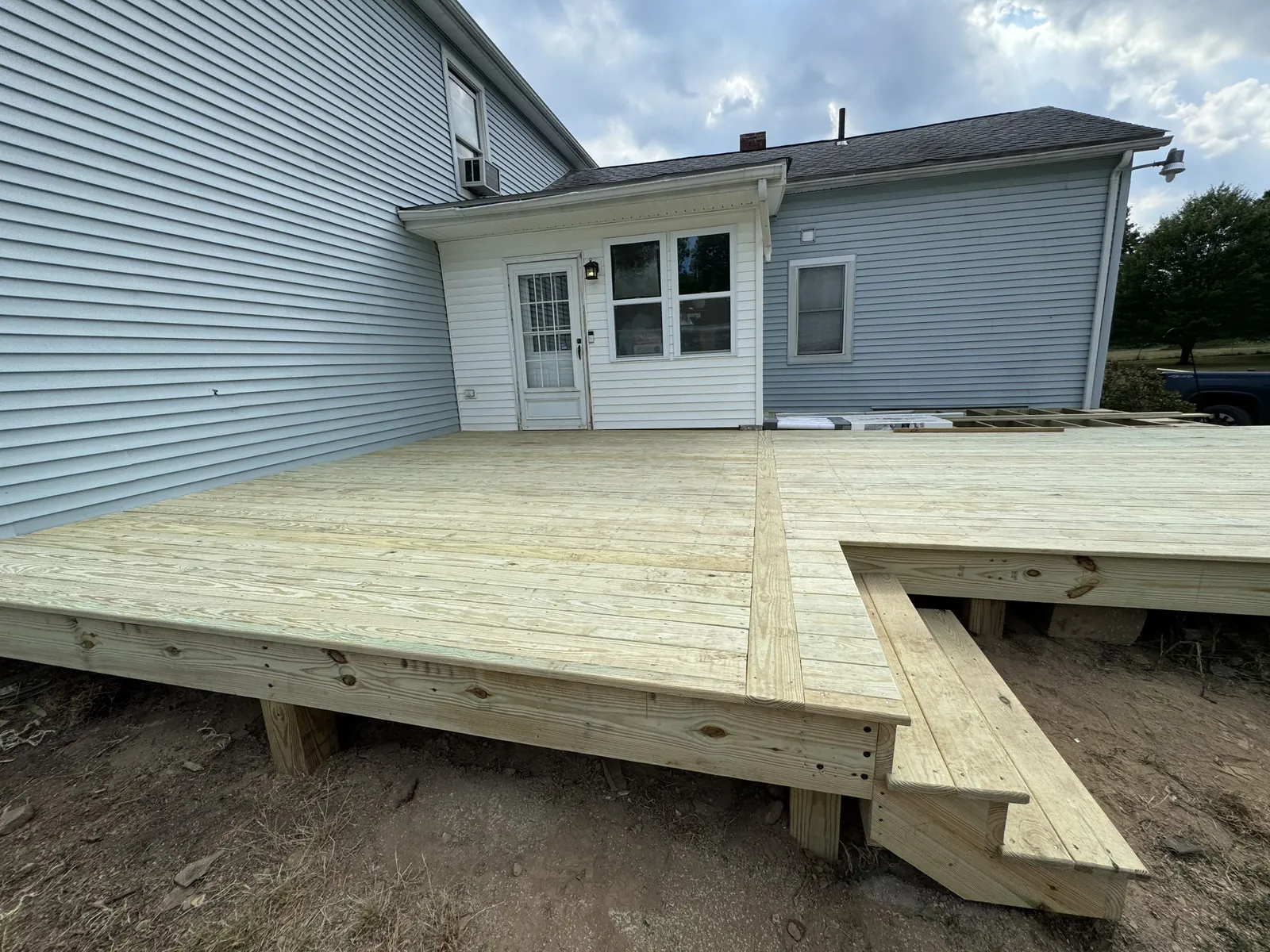
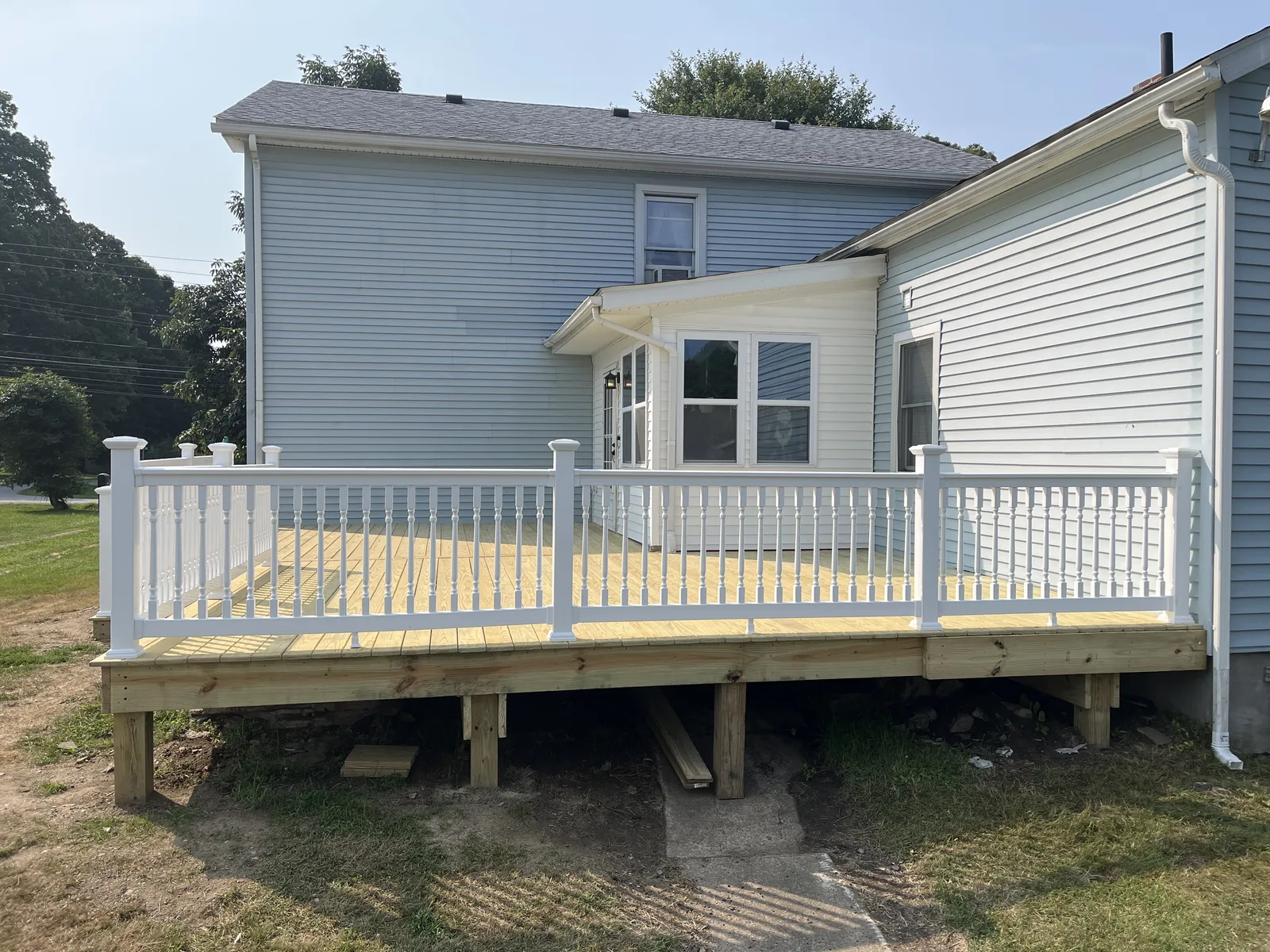
After the old deck was removed, the crew framed the new deck, laid the boards and installed white railings over the following two weeks. Nothing from the old deck structure was reused.
If your deck is getting older, a careful look at the wall behind it is one of the most useful things you can do before choosing new boards.
Planning to replace an older deck? We will look at the structure and the wall behind it.
Get a Free EstimateFrequently Asked Questions
Explore our service area
Get a Free Estimate
- Free detailed estimates
- Registered and insured
- Local Ashtabula County crew