Every January, we get calls from homeowners staring at water stains spreading across their ceilings. The culprit? Ice dams. And in Ashtabula County, where lake-effect storms can dump two feet of snow overnight, they're not just a nuisance. they're an inevitability unless you prepare.
The Science Behind the Damage
Here's what happens on your roof during a Saybrook Township lake-effect event:
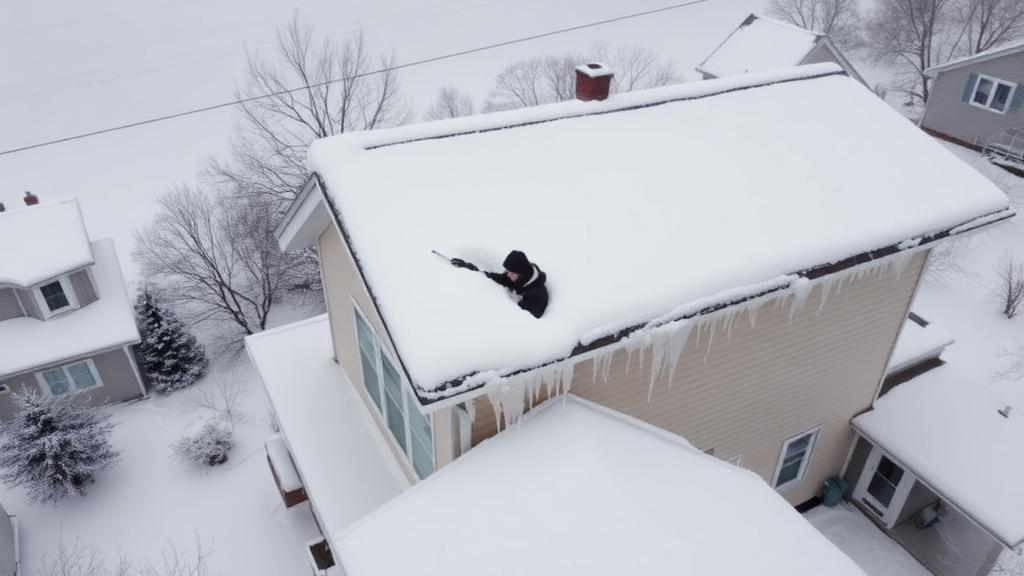
Heat rises through your ceiling. It warms the roof deck. Snow melts from underneath, not from the sun, but from your own furnace working overtime. That meltwater trickles down toward your eaves, hits the cold overhang where there's no heat below, and freezes solid.
Do that a few dozen times, and you've got a dam.
Very heavy lake-effect events: Saybrook and nearby communities can receive extreme lake-effect snowfall. A widely reported 2024 to 2025 lake-effect event produced more than 60 inches in parts of Saybrook. That kind of accumulation is the perfect recipe for catastrophic ice damming.
Behind that ice ridge, water pools. It has nowhere to go but up. under your shingles, into your sheathing, down your walls. By the time you see the stain, the damage is done.
Why Ashtabula County Gets Hit Harder
Three factors conspire against us:
1. Lake Erie's proximity generates wet, heavy snow that packs onto roofs like concrete. Powder would blow off. This stuff sticks.
2. Our housing stock is old. Nearly a third of homes in the county were built before 1939. Original insulation. if there was any. has settled, compressed, or been chewed through by decades of mice.
3. Temperature swings are violent. A sunny afternoon can hit 40°F while overnight drops to single digits. Every cycle advances the freeze-thaw damage.
Recognizing the Warning Signs
Don't wait for the ceiling stain. Watch for these earlier indicators:
Prevention: The Three-Layer Defense
Layer 1: Seal the Air Leaks
Warm air escaping into your attic is the root cause. Common culprits in older Ashtabula homes:
| Location | Why It Leaks | Cost to Seal |
|---|---|---|
| Attic hatch | No weatherstripping | $25-50 |
| Recessed lights | Improper IC rating | $200-400 |
| Bathroom fans | Ducted into attic, not out | $300-600 |
| Plumbing stacks | Gaps around penetrations | $100-200 |
| Chimney chase | Uncapped or poorly flashed | $200-500 |
Total air sealing investment: $500-1,500 for most homes.
Layer 2: Upgrade the Insulation
Department of Energy consumer guidance shows roughly R-49 to R-60 for uninsulated attics in climate zone 5, depending on which guidance table you use. That is guidance, not the current Ohio code requirement: your project target should follow the applicable energy code and the approved assembly. Most pre-1980 homes here have R-19 or less.
Options ranked by effectiveness:
Layer 3: Ventilate Properly
A cold attic is a healthy attic. You need balanced airflow: cold air enters through soffit vents, rises as it warms, and exits through ridge or gable vents.
The calculation: 1 square foot of net free vent area per 150 square feet of attic floor. or 1:300 if you have vapor barriers.
When Prevention Fails: Emergency Response
Already have ice dams? Here's how to limit damage without destroying your roof:
| Method | Effectiveness | Risk |
|---|---|---|
| Calcium chloride socks | Creates melt channels | Low. but slow |
| Roof rake from ground | Removes load safely | Low if done carefully |
| Professional steam removal | Immediate results | Lowest. but costs $300-600 |
Never use: Ice picks, hammers, hot water, or roof-mounted heat cables as a primary solution. The first three damage shingles. Heat cables treat symptoms while running up your electric bill.
Repair Costs When Ice Dams Win
If water's already inside, here's what you're looking at:
| Damage | Repair Cost |
|---|---|
| Drywall staining + paint | $300-800 |
| Drywall replacement | $500-1,500 |
| Insulation replacement | $800-2,500 |
| Roof sheathing repair | $1,500-4,000 |
| Structural repair | $3,000-10,000+ |
The math is clear: $2,000-4,000 invested in prevention saves $10,000+ in repairs.
What We Do About It
At Nailed It 440, we see ice dam damage every spring. We handle the interior repairs: water-damaged ceilings, ruined insulation, walls that need rebuilding. And we'll be honest about whether your issue needs a roofer or insulation contractor before we get involved.
We serve: Ashtabula, Geneva, Conneaut, Jefferson, Kingsville, Saybrook Township, and all 27 townships in Ashtabula County.
📞 Call (440) 224-4121 to discuss your situation. no charge, no pressure.
Related Services
Planning a project in Ashtabula County? Explore the services tied to this article.
Ready to Get Started?
Get a free, no-obligation estimate for your project. We'll discuss your vision, timeline, and budget, then show you exactly what's possible.