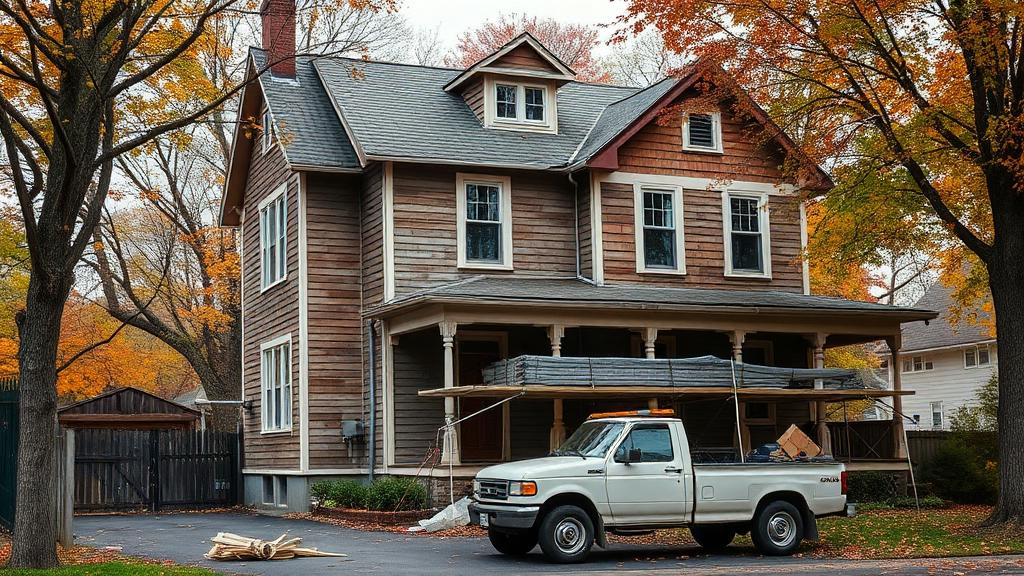
I've pulled more knob-and-tube wiring out of Ashtabula County walls than I can count. Opened up more lath-and-plaster ceilings held together by horsehair and hope. These old houses have stories. and complications.
Ohio's Western Reserve was settled early, and the homes show it. Ashtabula County ranks 8th in the state for oldest housing stock. The median home was built in 1962, but that average hides the reality: nearly a third of our houses went up before World War II. Some before World War I.
These aren't teardowns. They're solid structures with better lumber than anything you'd find at a big-box store today. But they require a different approach.
What's Lurking Behind Those Walls
The Electrical Reality
Pre-1960s electrical systems weren't designed for modern life. Your grandmother didn't have a microwave, hair dryer, computer, and air conditioner running simultaneously.
What we typically find:
Real talk: A panel upgrade costs $1,500-4,000. That sounds expensive until your insurance company denies a claim, or doesn't renew your policy. because of outdated wiring.
Plumbing Archaeology
Depending on when your home was built, you might have:
| Era | Pipe Material | Problem |
|---|---|---|
| Pre-1930 | Lead service lines | Health hazard |
| 1930-1960 | Galvanized steel | Corrosion, low pressure |
| 1950-1970 | Cast iron drains | Cracks, bellies, root intrusion |
| 1970-1995 | Polybutylene | Brittle failures, leaks |
We've opened walls for a simple vanity swap and discovered pipes corroded to the thickness of a credit card. Budget accordingly.
The Hidden Hazards
Lead paint: Homes built before 1978 may contain lead-based paint. It is not guaranteed, but assume it may be present unless the surfaces have been properly tested and documented as lead free. Intact, undisturbed paint is generally lower risk. Paid renovation work that disturbs covered painted surfaces in pre-1978 housing must follow applicable EPA Renovation, Repair and Painting (RRP) requirements.
Asbestos: Floor tiles, pipe insulation, ceiling textures, roof shingles, siding, even caulk and ductwork. Materials from this era may contain asbestos. Testing costs $25-75 per sample. Don't guess.
Vermiculite insulation: Some vermiculite insulation may be contaminated with asbestos. Avoid disturbing it and get qualified guidance and testing before any renovation work in that area.
What This Means for Your Budget
I tell every older-home client the same thing: your contingency is 20-30%, minimum.
Here's an honest comparison:
| Project | Post-2000 Home | Pre-1960 Home | Why the Difference |
|---|---|---|---|
| Kitchen remodel | $25,000-50,000 | $32,000-65,000 | Electrical upgrade, plumbing surprises, non-standard dimensions |
| Bathroom remodel | $12,000-25,000 | $15,000-38,000 | Lead abatement, subfloor rot, cast iron replacement |
| Basement finish | $25,000-50,000 | $30,000-65,000 | Waterproofing, low ceilings, foundation issues |
That's not padding. That's reality. I'd rather over-budget and return money than nickel-and-dime you through scope changes.
The Silver Lining
Older homes weren't built to modern code, but they were often built better than modern code requires:
The structure: Old-growth lumber with tight grain patterns. 2x4s that actually measure 2 inches by 4 inches. Plank subfloors that don't squeak or bounce.
The craftsmanship: Built-in cabinets, window seats, detailed moldings. Try finding a trim carpenter who can match 1920s baseboard profiles. it takes skill.
The lot: Bigger yards. Mature trees. Established neighborhoods. Things you can't buy new.
How We Approach Older Home Projects
Phase 1: Investigate before committing.
We do more exploration on older homes. Small openings. Camera scopes. Careful probing. It's cheaper to discover problems before drywall goes up.
Phase 2: Address safety first.
Electrical, structural, hazardous materials. These get solved before we talk about countertop colors.
Phase 3: Honor the character.
Where it makes sense, we preserve original features rather than gut them. Refinish instead of replace. Match instead of modernize.
Phase 4: Document everything.
Photos before, during, and after. What we found. What we fixed. This protects you at resale and with insurance.
Experience Matters Here
We've worked on homes throughout Ashtabula County's historic districts and rural townships, from Conneaut's lakefront cottages to Jefferson's downtown Victorians. Every old house teaches something new.
If you're planning a renovation in a pre-1960 home, let's talk honestly about what you might encounter.
📞 Call (440) 224-4121 for a no-obligation consultation.
Related Services
Planning a project in Ashtabula County? Explore the services tied to this article.
Ready to Get Started?
Get a free, no-obligation estimate for your project. We'll discuss your vision, timeline, and budget, then show you exactly what's possible.